Şanlıurfa: Where prophets, prehistory and daily life converge

Beneath the ancient citadel of Şanlıurfa, black-spotted golden carp glide through turquoise pools, watched over by pilgrims and visitors alike.
According to tradition, this is the place where King Nemrut, or Nimrod, tried to burn Prophet Ibrahim for rejecting idolatry.
That story lies at the heart of Şanlıurfa, a city known as the City of Prophets and revered by Muslims, Christians and Jews alike.
Linked to figures such as Prophet Ibrahim, Job and Noah, the city blends sacred legend with layers of history that stretch back thousands of years.
At the Dergah Mosque Complex in the old town, Balıklıgöl — the famed Fish Lake — draws worshippers who pray, feed the sacred carp and linger in the calm shade of trees.
Nearby is Mevlid-i Halil Cave, believed to be Prophet Ibrahim’s birthplace.
Inside, soft prayers echo as visitors seek blessings, particularly women hoping for children or healing.
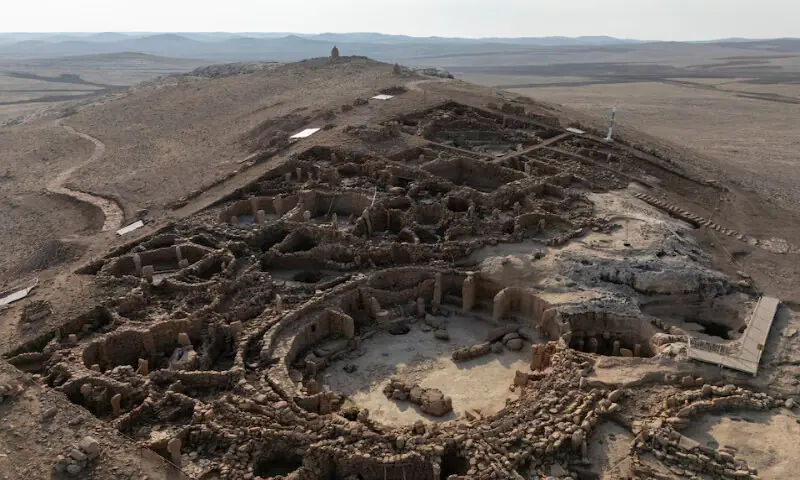
Yet Şanlıurfa’s story long predates scripture. Just 14 miles away lies Göbeklitepe, a Neolithic site dating back more than 11,000 years — older than Stonehenge and the Egyptian pyramids.
Its monumental stone pillars, carved with animal figures, are rewriting ideas about early civilisation, suggesting ritual and belief may have preceded agriculture.
Artefacts from this deep past are housed in the Şanlıurfa Archaeology Museum, where the 11,500-year-old Urfa Man — the world’s oldest life-size statue — stands alongside Assyrian, Babylonian and Roman relics.
Nearby mosaics from ancient Edessa depict mythological scenes, while rock-cut tombs across the road mark the city’s Roman-era necropolis.
Modern Şanlıurfa feels alive in a very human way. In the covered bazaar, shopkeepers call out greetings as they arrange copper pots, folded fabrics and mounds of spices, while shoppers pause to chat as much as they do to buy.
At old caravanserais, time seems to move in slow motion. Men wrap their fingers around warm, tulip-shaped tea glasses as backgammon dice click and tumble across scarred wooden boards.
Laughter breaks out, a story is interrupted, then picked up again at the next table, as if everyone is part of the same conversation.
After the sun sets, the air fills with the smoky scent of kebabs. Knife-minced Urfa kebab sizzles on grills, hands shape spicy çiğ köfte, and plates of syrup-soaked şıllık dessert are shared without hurry.
Hospitality here is a habit, a trait. On sıra gecesi nights, neighbours gather to eat, recite poetry and listen to music, keeping traditions alive by living them together.
Young and old sit side by side, not in a lesson but in a moment — watching, listening, absorbing traditions without anyone needing to explain them.
Even the mosques follow this gentle rhythm. Beyond the call to prayer, they offer shade and stillness.
Men stretch out on the carpets, exchange a few quiet words, or simply rest, escaping the heat.
It is a simple, everyday reminder that in Şanlıurfa, faith is not separate from life — it lives comfortably within it.
“Şanlıurfa isn’t just a place you visit,” says local resident Mehmet Kaya. “It’s a place you feel.”
From prehistoric stone circles to living rituals, the city exists as a rare convergence of myth, memory and modern life — where the ancient and the everyday continue to coexist.
For the latest news, follow us on Twitter @Aaj_Urdu. We are also on Facebook, Instagram and YouTube.
Sanliurfa
Edessa
Göbeklitepe
Prophet Ibrahim’s birthplace
Mevlid i Halil Cave
Dergah Mosque Complex
Balıklıgöl
King Nemrut
Russian drones, missiles pound Ukraine ahead of Zelensky-Trump meeting
Thailand and Cambodia sign truce to halt fierce border conflict

Netanyahu to press Trump on Iran missiles as war fears resurface
Yemen’s Saudi-led coalition says it will deal with military moves in Hadramout
Turkey says Russia gave it $9 billion in new financing for Akkuyu nuclear plant