


From 9/11 to Tehran: America’s long war continues


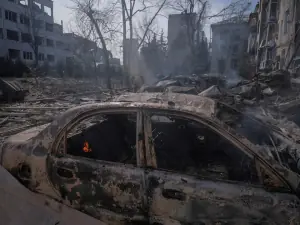

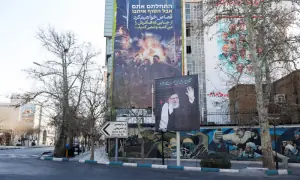
Despite pledging to end America’s involvement in costly and prolonged foreign wars, President Donald Trump has joined Israel in launching a large-scale military assault on Iran, targeting its leadership as well as nuclear and missile infrastructure.
The assault marks the latest chapter in more than two decades of US military engagement abroad — a pattern that has defined American foreign policy since the September 11, 2001, attacks, according to a report by Al Jazeera.
Two decades of war
President George W. Bush declared a global “war on terror” following the 9/11 attacks, initiating military campaigns that would stretch across almost all continents.
Since 2001, the US has fought three full-scale wars and carried out bombing campaigns in at least 10 countries.
These operations include large-scale invasions and targeted drone strikes, including covert and special missions.
Quoting research by Brown University’s Watson Institute for International & Public Affairs, the report said that US-led wars since 2001 have directly caused approximately 940,000 deaths across Afghanistan, Pakistan, Iraq, Syria, Yemen and other conflict zones.
The figure does not include indirect deaths linked to hunger, disease and infrastructure collapse.
The financial toll has also been immense.
The United States has spent an estimated $5.8 trillion on post-9/11 conflicts, including Department of Defence operations, homeland security spending, veterans’ care and interest payments on war-related borrowing.
Long-term veterans’ healthcare costs are projected to add at least another $2.2 trillion over the next three decades, pushing the total estimated cost to roughly $8 trillion.
Afghanistan: America’s longest war
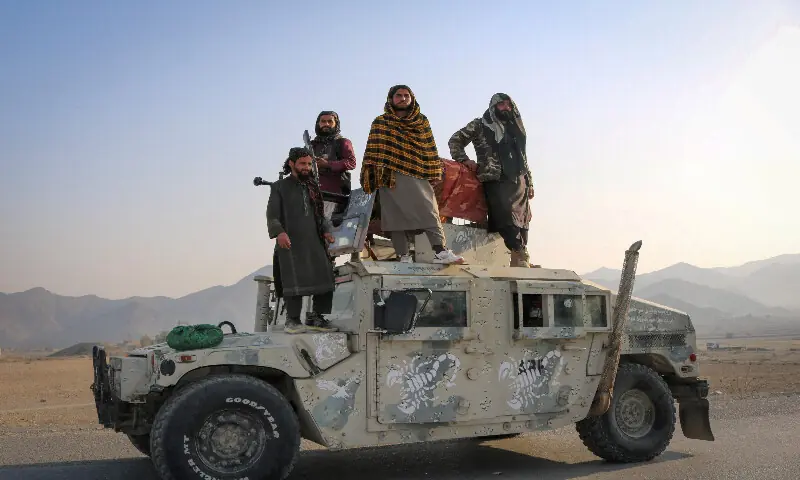
The first direct response to the 9/11 attacks came on October 7, 2001, when the US invaded Afghanistan to dismantle Al Qaeda and remove the Taliban from power.
Although the Taliban government fell within weeks, insurgency and armed resistance went on for 20 years, spanning the tenure of four US presidents.
The withdrawal of US forces in 2021 saw the Taliban regain control.
According to estimates, around 241,000 people died directly in the Afghan war, including at least 3,586 US and NATO soldiers.
The war in Afghanistan cost the United States approximately $2.26 trillion.
Iraq: Another prolonged conflict
In March 2003, the US forces invaded Iraq, claiming that President Saddam Hussein possessed weapons of mass destruction — allegations that were later proven false.
Although major combat operations were declared over within weeks, the US invasion caused chaos and Iraq descended into years of violence and instability.
The power vacuum in Iraq contributed to the rise of Daesh.
US combat troops were withdrawn in 2011 under President Barack Obama.
Expanding air and defence campaigns
Beyond Afghanistan and Iraq, US military operations expanded through air and drone campaigns in Pakistan, Somalia and Yemen.
The CIA began drone strikes in Pakistan’s tribal regions in the mid-2000s, targeting Al Qaeda and Taliban figures.
President Obama later expanded the use of drone warfare significantly.
The US also conducted air strikes in Somalia against Al Qaeda affiliates and Al Shabab, and in Yemen against Al Qaeda leaders.
Intervention in Libya and Syria
In 2011, the US joined a NATO-led intervention in Libya against Muammar Gaddafi’s government.
Gaddafi was eventually killed, but for Libyans, his ouster brought bloodbath, instability, fractured governance and uncertainty.
From 2014 onward, the US intervened in Syria as part of a campaign against Daesh, conducting air strikes against Daesh targets while supporting local militia forces.
In Iraq, US forces continued their advisory missions and counter-terrorism operations, including a 2020 strike ordered by Trump that killed Iranian General Qassem Soleimani.
A continuing pattern
Trump’s latest military action against Iran underscores the key role of military force in US foreign policy.
While presidents from both parties have promised to reduce foreign entanglements, successive administrations have relied on military power to pursue strategic objectives.
As tensions with Iran escalate, analysts say the renewed confrontation raises questions about whether the United States is entering yet another prolonged and costly conflict in a region already shaped by decades of war.
For the latest news, follow us on Twitter @Aaj_Urdu. We are also on Facebook, Instagram and YouTube.