


Net billing shock: NEPRA’s new rules push up power bills




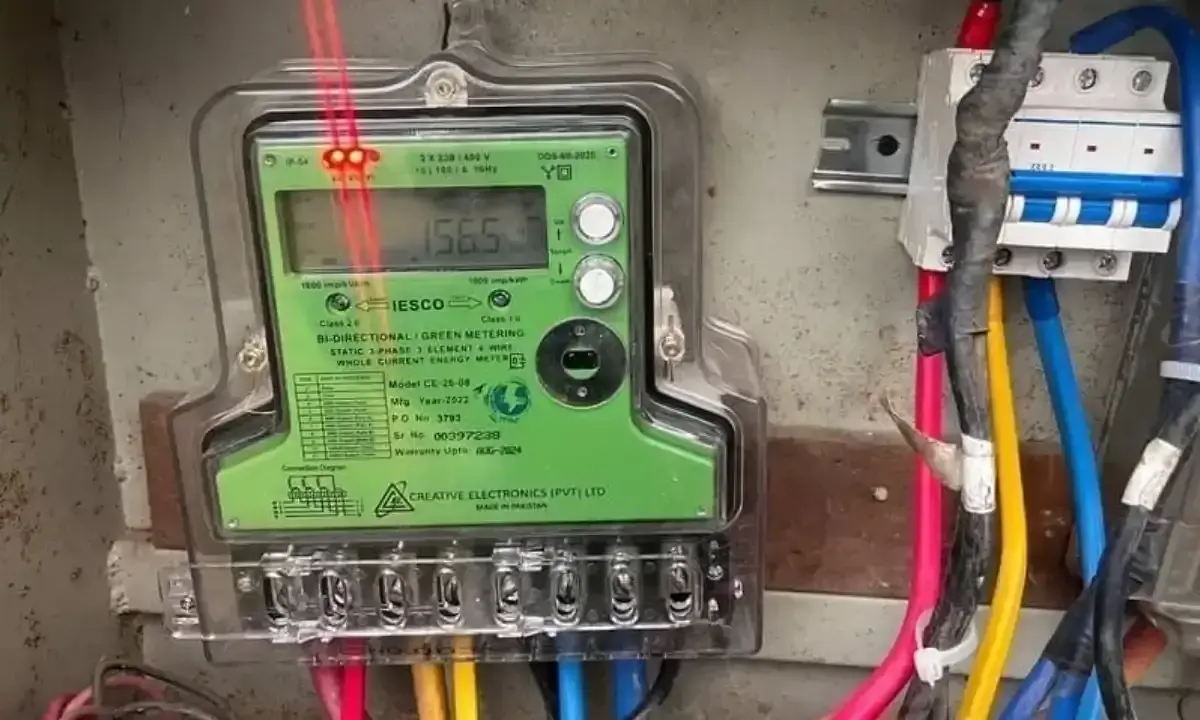
The National Electric Power Regulatory Authority (NEPRA) has enforced new regulations replacing net metering with a net billing system for solar consumers, a move that is expected to sharply reduce savings and increase electricity bills for households and businesses across Pakistan.
Under the Net Metering Regulations 2026, notified on Monday, surplus electricity supplied to the national grid will now be purchased at the prevailing national average energy price, currently around Rs11 per unit, instead of the earlier fixed rate of about Rs27 per unit.
At the same time, solar users will continue to buy electricity from the grid at regular tariffs, which range between Rs40 and Rs50 per unit and are higher in some areas.
The new system ends the practice of adjusting imported and exported electricity units against each other, which had been the cornerstone of net metering and a major incentive for investing in rooftop solar.
Under the previous model, consumers could offset the electricity they took from the grid with the units they sent back. If production exceeded consumption, bills were significantly reduced and in some cases fell to zero. This mechanism helped drive rapid growth in solar installations, especially as electricity prices continued to rise.
However, power distribution companies argued that the system was causing financial losses, as many solar users paid little or nothing despite relying on the grid for backup and transmission.
Under net billing, electricity bought from the grid and electricity sold to the grid will now be calculated separately. Consumers will pay full tariffs on their usage, while surplus power will be credited at much lower rates.
NEPRA said the new regulations apply to solar as well as biogas-based power consumers.
The regulator has stated that existing net metering users will gradually be shifted to the new system. While their current contracts will remain valid until expiry, the method for calculating exported electricity will be revised. New consumers will be offered net billing agreements for five years, renewable for another five-year term.
Billing will be issued at the end of each cycle, and payments for surplus electricity will be made on a quarterly basis. If exported power exceeds the monthly bill, the balance will either be adjusted in future bills or paid every three months.
The new rules also limit the maximum capacity of solar systems to one megawatt and require that the system size does not exceed the approved consumer load, in an effort to prevent excessive generation from straining the grid.
The financial impact of the change has become a major concern among consumers.
Awab Alvi, son of former president Arif Alvi, explained the difference through an example.
If a user consumes 500 units from the grid and exports 400 units through solar, under net metering, only the remaining 100 units are billed, resulting in a charge of around Rs3,300.
Under net billing, the same user would be charged about Rs16,500 for electricity purchased from the grid, while receiving a credit of roughly Rs4,000 for exported power. After adjustment, the final bill would rise to around Rs12,500.
“The solar system remains the same, but the bill increases dramatically,” he said.
Former finance minister Miftah Ismail criticised the policy, saying the government would sell electricity to consumers at around Rs40 per unit while buying it back at only Rs11 per unit, along with imposing 18 per cent sales tax on expensive power.
“This gap is financially damaging for consumers,” he said, warning that the new structure undermines incentives for clean energy.
Senator Sherry Rehman said the decision was driven by fiscal motives.
In a post on social media platform X, she wrote that electricity had quietly become the state’s most reliable source of tax revenue and that self-generating consumers reduced both demand and levy collections.
She warned that the new “prosumer” rules would slow Pakistan’s energy transition, weaken climate commitments, and effectively punish citizens who invested in clean energy on the basis of state-backed agreements.
Pakistan Peoples Party leader Ahmed Ghuman said the purchase price of solar electricity had fallen sharply from Rs25.32 to Rs8.13 per unit.
“A single decision has reduced rates by Rs17.19. This is not reform, it is open punishment,” he said.
Journalist Umar Cheema also criticised the policy, saying frequent regulatory changes discourage investors.
“A state that first encourages investment and then changes rules to penalise it cannot expect trust,” he said.
Solar industry representatives say the move is aimed at increasing consumption from the national grid. Solar Association chairman Waqar Musa said the government wants to reduce financial pressure on the power sector by ensuring higher grid usage and recovering fixed costs and capacity payments.
Experts estimate that Pakistan currently generates around 7,000 megawatts from solar systems, including both net metering and non-net metering users. They say the growing use of rooftop solar has reduced grid demand, shifting the burden of capacity payments onto non-solar consumers.
Energy analysts also warn that the new policy may push consumers away from selling power to the grid and towards installing battery storage systems. With lower buyback rates, storing electricity for personal use has become more attractive than exporting it.
As a result, more households and businesses may seek to reduce their dependence on grid electricity and avoid high tariffs altogether.
Senator Sherry Rehman has suggested alternative approaches, including establishing data centres to absorb surplus power and renegotiating costly capacity payment agreements where the state pays producers even when electricity is not used.
NEPRA said the 2026 regulations have replaced and suspended the Net Metering Regulations 2015 and are aimed at stabilising the power sector.
However, critics argue that the new net billing system shifts the financial burden onto consumers who invested in solar based on previous government policies and expectations.
As the new rules take effect, solar users across the country fear that the shift from net metering to net billing could slow Pakistan’s renewable energy momentum and make clean power less affordable for ordinary households and small businesses.
For the latest news, follow us on Twitter @Aaj_Urdu. We are also on Facebook, Instagram and YouTube.