


China’s influence in Bangladesh set to grow after election



China’s influence in Bangladesh, boosted by the 2024 ouster of pro‑India leader Sheikh Hasina, is likely to deepen after this week’s election, although politicians and analysts say India is too large a neighbour to be sidelined completely.
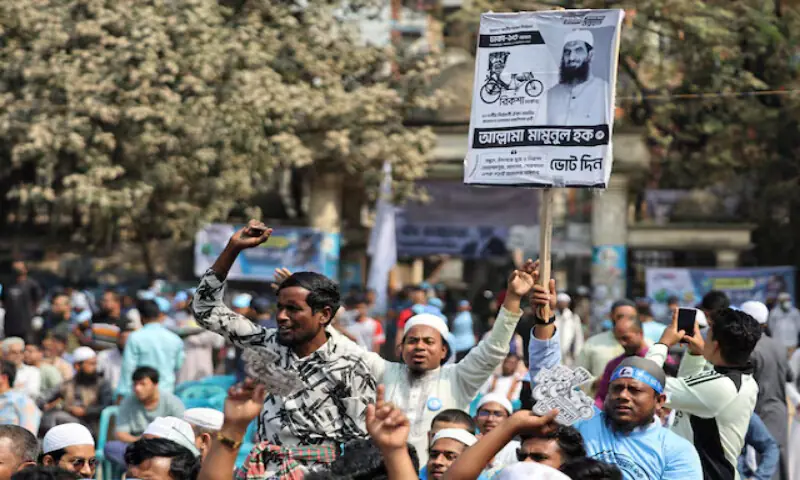
Bangladesh votes on February 12 and the two frontrunner parties have historically had far cooler ties with India than Hasina did during her uninterrupted 15‑year rule from 2009.
Her Awami League party is now banned and she is in self-imposed exile in New Delhi.
Meanwhile, China has stepped up its investment and diplomatic outreach in Dhaka, most recently signing a defence deal to build a drone factory near Bangladesh’s border with India.
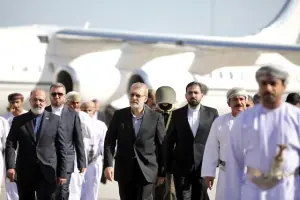
Chinese Ambassador Yao Wen is often seen meeting Bangladeshi politicians, officials and journalists, according to the embassy’s Facebook posts, discussing infrastructure projects worth billions of dollars and other cooperation between the two countries.
“People in Bangladesh see India as complicit with Sheikh Hasina’s crimes,” said Humaiun Kobir, foreign affairs adviser to leading prime ministerial candidate Tarique Rahman of the Bangladesh Nationalist Party (BNP).
“People will not accept building relations or doing business with a country that is harbouring a terrorist and allowing them to destabilise our country.”
Rahman himself has struck a more conciliatory note, telling Reuters last week: “We’ll try to have friendship with all countries, but of course, protecting the interests of my people and my country.”
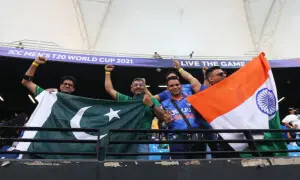
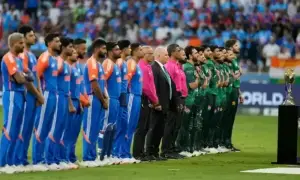
Dhaka-Delhi ties have worsened in recent weeks, especially in cricket, the game fervently followed in both countries.
A celebrated Bangladeshi bowler was dropped from an Indian Premier League team after pressure from Hindu groups.
Dhaka retaliated by banning broadcasts of the league, scheduled for March-May.
It also asked that its matches for the February-March men’s cricket World Cup be moved from India to Sri Lanka, but was dropped from the tournament after the International Cricket Council rejected the request.
Both countries have curtailed entry visas to each other, and publicised engagements between Indian and Bangladeshi officials have been rare since Hasina’s fall.
However, Indian Foreign Minister S. Jaishankar met Rahman in Dhaka in December to offer India’s condolences on the death of his mother, former prime minister Khaleda Zia.
Bangladesh’s interim government has repeatedly and unsuccessfully asked India to extradite Hasina, especially after a Dhaka court late last year sentenced her to death for ordering a deadly crackdown on the uprising.
A United Nations report estimated that up to 1,400 people were killed and thousands wounded, although Hasina has denied ordering the killings.
Steadily building influence
Ahead of the election, the BNP and its closest rival, Jamaat‑e‑Islami, have accused each other of courting foreign interests, with Jamaat alleging the BNP is too close to India, and the BNP pointing to Jamaat’s historic ties with Pakistan, India’s old enemy.
“Not Dilli, not Pindi, Bangladesh before everything,” Rahman, the BNP leader, told a recent rally, referring to New Delhi and Pakistan’s military headquarters in Rawalpindi.
Indian officials have privately acknowledged that with the Awami League out of power, New Delhi must engage whoever forms the next government.
China has been Bangladesh’s largest trading partner for more than a decade, with annual bilateral trade hovering around $18 billion and imports of Chinese goods accounting for nearly 95% of the total.
Chinese companies have also invested hundreds of millions of dollars in Bangladesh since Hasina left.
Under Hasina, Indian conglomerates, including the Adani Group, expanded their business in Bangladesh, although no new deals have materialised since.
“China is steadily building its influence both in the open and behind the scenes, benefiting from the crisis in India-Bangladesh relations,” said Constantino Xavier, a senior fellow at New Delhi think tank Centre for Social and Economic Progress.
“China has also been able to capitalise on declining US engagement and Trump’s tariff war, positioning itself as a more credible and predictable economic partner.”
Analysts say Bangladesh is expected to keep strengthening ties with China because it offers more substantial economic incentives, and, unlike Hindu‑majority India, does not get drawn into controversies involving Bangladesh’s Hindu community during periods of unrest.
“If Dhaka and New Delhi are unable to get things back on track, there will be more incentive for the next government in Bangladesh to go full steam ahead with Beijing,” said Thomas Kean of the International Crisis Group.
Not severing ties with India
Analysts, however, say deepening engagement with China does not automatically shut out India.
“Bangladesh needs both China and India, and you have to think of it in pragmatic terms,” said Lailufar Yasmin of Dhaka University.
“While ties with China may improve, any party that comes to power will not be imprudent enough to ignore India.”
Bangladesh, bordered by India on three sides and the Bay of Bengal to the south, relies on it for trade, transit and security cooperation, while New Delhi needs stable relations with Dhaka to manage its land border.
Hasina had helped crack down on anti‑India insurgents based in Bangladesh.
Government data shows annual bilateral trade has remained stable at about $13.5 billion, dominated by Indian sales to Bangladesh, despite the political rupture.
Adani has also increased power supplies to Bangladesh in recent months to ease shortages, even though Dhaka has criticised tariffs negotiated under Hasina as too high.
While India helped Bangladesh win independence from Pakistan in 1971, long‑standing grievances include water‑sharing disputes, border killings and resentment over what many Bangladeshis see as India legitimising Hasina’s unpopular rule.
Leaders of the National Citizen Party, a Gen Z‑backed group aligned with Jamaat, have taken a hard line on India.
“It’s not just election rhetoric,” NCP chief Nahid Islam told Reuters.
“New Delhi’s hegemony is deeply felt among young people; it’s one of the main issues of the election.”
For the latest news, follow us on Twitter @Aaj_Urdu. We are also on Facebook, Instagram and YouTube.