


Pakistan’s principled India match boycott rattles Indian cricket ranks




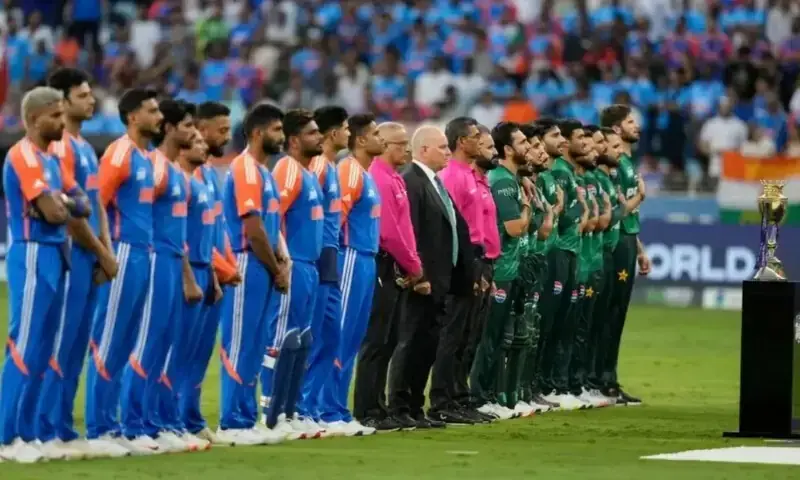
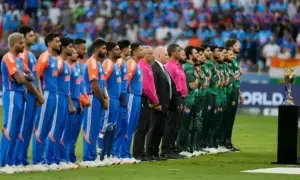
Pakistan’s decision to boycott only its scheduled match against India at the ICC T20 World Cup has triggered sharp and, at times, hostile reactions across India, exposing what analysts in Pakistan describe as deep discomfort within Indian cricket over challenges to its dominance in global cricket affairs.
The government of Pakistan announced on Sunday that the national team would participate in the T20 World Cup in Sri Lanka but would not take the field for the February 15 match against India.
In a statement posted on social media platform X, the government said Pakistan had cleared the team to travel for the tournament while taking a principled stand on the India fixture.
The move sparked widespread debate in India, with former cricketers, commentators and politicians openly pressuring the International Cricket Council (ICC) to act against Pakistan.
Indian Member of Parliament and Congress leader Shashi Tharoor criticised the politicisation of cricket, saying sport was meant to bring people closer but had instead become a victim of political interference.
He also criticised the Board of Control for Cricket in India (BCCI) and condemned the exclusion of Bangladeshi fast bowler Mustafizur Rahman from the Indian Premier League (IPL), an episode that triggered the wider crisis.
Tharoor said Pakistan appeared to have taken the step in solidarity with Bangladesh but warned that the situation was now escalating.
Senior Indian journalist Vikrant Gupta claimed on X that the ICC had warned Pakistan it could not selectively boycott a single match, asserting that a team must either play the entire tournament or face legal consequences.
His remarks highlighted the pressure being exerted on the ICC, largely driven by commercial interests tied to India-Pakistan fixtures.
BCCI vice-president Rajeev Shukla told Indian media that the ICC had issued a “strong statement” on the matter and said the Indian board agreed with the ICC’s position, but would not comment further until consultations were completed.
Former Indian fast bowler Atul Wassan, speaking to ANI, said he felt some sympathy for Pakistan but also expressed surprise over the decision.
He questioned whether Pakistan would also refuse to play India if the two sides met again later in the tournament, including in the final.
“If Pakistan does not play against India and gives away the points, and then meets India again later, even in the final, will they still not play?” Wassan asked.
He went on to say that by taking this decision, Pakistan had left the ICC with “no option,” adding that allowing such a move would amount to “blackmail.”
Wassan claimed the ICC would be forced to act and warned that Pakistan may not fully realise the scale of the potential financial losses involved.
Former Indian spinner Ravichandran Ashwin also reacted on X, questioning whether an India-Pakistan clash would be impossible even in the knockout stages.
He warned that such a scenario could severely damage the credibility of the T20 World Cup.
Renowned commentator Harsha Bhogle echoed similar concerns, saying Pakistan’s conditional participation posed serious legal and commercial challenges.
He suggested that the ICC could deduct broadcaster losses from Pakistan’s share of ICC revenues and questioned how the situation would be handled if an India-Pakistan final were scheduled.
The controversy stems from Bangladesh’s withdrawal from the tournament after Mustafizur Rahman, who had been picked by Kolkata Knight Riders for IPL 2026 for Rs920 million, was dropped amid rising India-Bangladesh tensions and reported security threats.
The Bangladesh Cricket Board later requested the ICC to move its World Cup matches from India to Sri Lanka, citing security concerns.
The request was rejected, reportedly under pressure from the BCCI, prompting Bangladesh to pull out of the event.
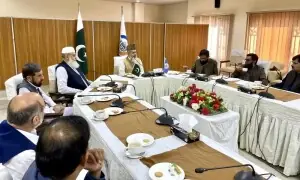
Amid these developments, reports emerged that Pakistan was considering its own options. The government ultimately decided that Pakistan would participate in the World Cup while refusing to play India.
Indian media have since claimed that the ICC may convene a board meeting to decide Pakistan’s status in the tournament and have warned of possible sanctions and financial penalties. No official ICC decision has been announced so far.
In Pakistan, the decision is being viewed as a measured stand against political interference in sport, highlighting what many see as double standards in global cricket governance and the disproportionate influence exercised by Indian cricket authorities.
For the latest news, follow us on Twitter @Aaj_Urdu. We are also on Facebook, Instagram and YouTube.