


PM Shehbaz rolls out measures to boost industry, trade and exports

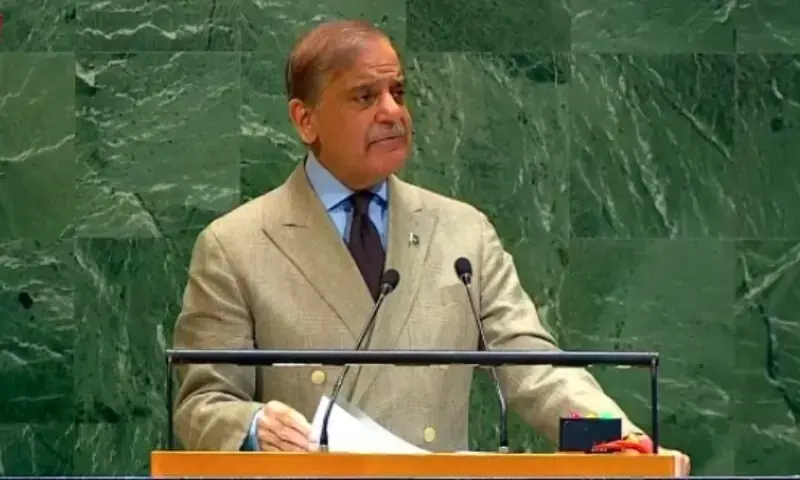
Prime Minister Shehbaz Sharif on Friday announced a series of measures aimed at strengthening Pakistan’s industry, trade, and exports.
The initiatives include a 300-basis-point cut in the refinance rate for exporters to 4.5%, reductions in industrial power tariffs and wheeling charges.
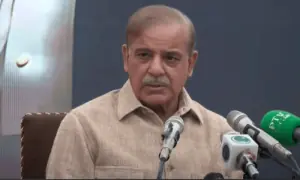
Addressing the country’s leading exporters and business leaders today to discuss the state of the economy and the government’s policy measures, PM Shehbaz outlined a broader roadmap to move the economy from stabilisation toward sustained growth amid ongoing efforts to attract investment and boost exports.
PM Shehbaz announced that the export refinance rate has been reduced by 300bps to 4.5% from 7.5%.
He also announced a reduction in power tariffs for industries by Rs4.04 per unit. “I wish to reduce it further by Rs10 per unit. Similarly, the government has also decided to decrease wheeling charges for industries by Rs9 per kWh,” he said.
PM announced that the government has decided to offer blue passports to top-performing exporters for two years.
A statement issued by the Prime Minister’s Office on Thursday said that the prime minister would outline his vision for strengthening industry, trade and exports, while also presenting a future roadmap aimed at moving the economy from stabilisation towards sustained growth.
The announcements came amid the government’s efforts to boost exports, attract investment and place the economy on a durable growth path.
Recalling the government’s economic trajectory, PM Shehbaz said that inflation was galloping while the policy rate stood at 22%. However, owing to government measures, the policy rate now stands at 10.5%, while the inflation rate has reduced to single-digit levels, he said.
He said that Pakistan averted a last-minute sovereign default after several rounds of negotiations with the International Monetary Fund (IMF).
The prime minister noted that Pakistan’s foreign exchange reserves, which have doubled in recent months, are mostly comprised of loans from friendly countries, including China, KSA, UAE and Qatar.
“Our economy has achieved stability, but it is still not enough,” he said, admitting that poverty and unemployment have risen, while exports remain stagnant.
The prime minister said that Pakistani exporters are competing with countries offering products at lower rates. “This is because electricity rates remain high, whereas the policy rate, despite dropping from 22% to 10.5%, also remains elevated and should be brought down.”
Days earlier, the State Bank of Pakistan (SBP) decided to keep its benchmark policy rate unchanged at 10.5% in its first Monetary Policy Committee (MPC) meeting of 2026.
“Private sector should run businesses, not governments,” he said, adding that Pakistan’s economy should move towards sustainable, exports-led growth. “FDI should be based on export-led growth.”
PM Shehbaz said that the tax rate should be lowered, especially for direct taxes. “I am convinced that we need to reduce our direct tax rates to grow our industry and exports,” he said.
However, the government would not compromise on collecting indirect taxes. “I will not desist and keep on marching till we recover the last indirect tax,” he maintained.
Earlier, awards were presented to exporters who had made significant contributions to the economy.
For the latest news, follow us on Twitter @Aaj_Urdu. We are also on Facebook, Instagram and YouTube.