


Bangladesh’s Jamaat-e-Islami rebrands itself ahead of polls



Long vilified for opposing independence and barred from electoral politics for over a decade, Bangladesh’s biggest religious party is reinventing itself and attracting new support ahead of parliamentary polls next month, unsettling moderates and minority communities.
Jamaat-e-Islami began its overhaul soon after a youth-led uprising in the Muslim-majority nation of 175 million people toppled Prime Minister Sheikh Hasina in August 2024.
With Hasina’s Awami League banned, Jamaat is betting on its anti-corruption image, welfare outreach, and what analysts describe as a more inclusive public stance to deliver the party’s best-ever performance.
A December opinion poll by the US-based International Republican Institute ranked Jamaat as the most “liked” party and projected a tight race with the Bangladesh Nationalist Party for the top spot in the February 12 election.
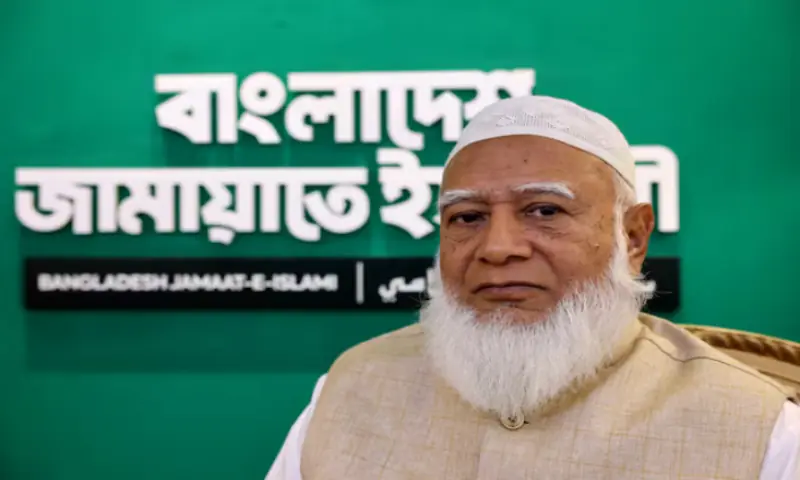
“We started welfare politics, not reactionary politics,” Jamaat chief Shafiqur Rahman told Reuters, citing its medical camp initiatives, flood relief and aid for families of those killed in the uprising.
“The constructive politics, which Jamaat and its associates … are doing now, people will put their trust and belief in Jamaat-e-Islami,” Rahman said.
The party has its origins in the pan-Islamist Jamaat-e-Islami movement, which emerged in India in the early 1940s and called for a society governed by Islamic principles.
Jamaat opposed Bangladesh’s independence, and during Hasina’s rule, many of its leaders were executed or jailed in a war crimes tribunal.
In 2013, it was barred from elections after a court ruled its charter was in conflict with Bangladesh’s secular constitution.
The electoral ban was lifted last year, and Jamaat’s student wing swept the Dhaka University polls, beating the Gen-Z National Citizen Party formed by leaders of the anti-Hasina movement.
Months later, it formed an electoral alliance with the NCP, which some analysts say could help soften Jamaat’s image.
“We want something new, and the new option is Jamaat,” said Mohammad Jalal, 40, who sells coconut water from a mobile van in a crowded Dhaka market.
“They have a clean image and work for the country.”
Political analyst and theologian Shafi Md. Mostafa said the party’s shift from a “stigmatised force with limited space” to a “rehabilitated, pragmatic contender” had been helped by public anger over abuses during Hasina’s rule.
“The authoritarian tendencies of the Awami League have created widespread frustration, allowing Jamaat to revive its rallying cry of ‘Islam as a solution’ and present itself as a moral alternative,” Mostafa said.
For the first time, Jamaat has nominated a Hindu candidate and spoken out against recent attacks on minorities.
On its website, the party says it wants Bangladesh to be a democracy guided by Islamic principles.
Party leaders have also publicly assured women of equal rights, though Jamaat has not named any women as candidates for the 300 parliamentary seats.
Rahman said women could gain representation through the 50 seats to be allocated by proportional representation after the election.
Shireen Huq of women’s activist organisation Naripokkho said the promises were “an electoral ploy.”
“No matter what they say now, they will return to their dogma, which includes restrictions on women in every sphere,” she said.
Umama Fatema, a 26-year-old student activist who was at the forefront of the uprising, is also sceptical.
“One day they talk about women’s empowerment, but the next the party will talk about five-hour workdays for women,” she said, referring to the Jamaat chief’s suggestion that women work only five hours a day so they can look after their families.
“Minorities have never had real protection under any government, but the fear and insecurity we now face is unprecedented,” said a minority community leader, requesting anonymity for fear of reprisals.
“If a Jamaat-led coalition comes to power, there is a real risk that Bangladesh will move towards a full-fledged Islamic republic.
Today, I fear for my life, and I fear that minorities in Bangladesh may not have a secure future,“ he added.
Jamaat spokesperson Ahsanul Mahboob Zubair said the party had “never been involved in, nor has it ever supported, any acts of violence or intolerance in the name of religion”, and called for an investigation.
Jamaat, which was a junior coalition partner in the BNP-led government from 2001 to 2006, has formed electoral alliances with most of the country’s other parties, some more conservative.
It began shortlisting election candidates early last year, hiring an international agency to assess voter sentiment.
Last week, Jamaat said it would contest 179 seats, with 74 distributed among the NCP and other allies.
A further 47 seats are still to be shared after one party pulled out of the alliance.
“Jamaat approached me in April,” said Mir Ahmad bin Quasem, the son of a Jamaat leader who was hanged for war crimes during Hasina’s rule and who spent eight years in secret detention before his release in August 2024.
“They showed me data suggesting people across the country were fed up with the old parties and wanted change. They believed there was a real opportunity — and I joined.“
Some say a Jamaat government might also move closer to Pakistan, marking a departure from Hasina’s era when India was the country’s most important bilateral partner.
Rahman said that the party was not inclined towards any country.
“We maintain relations in a balanced way with all.
We are never interested in leaning towards any one country. Rather, we respect all and want balanced relations among nations,“ he said.
For the latest news, follow us on Twitter @Aaj_Urdu. We are also on Facebook, Instagram and YouTube.