


IMF lowers Pakistan’s growth outlook




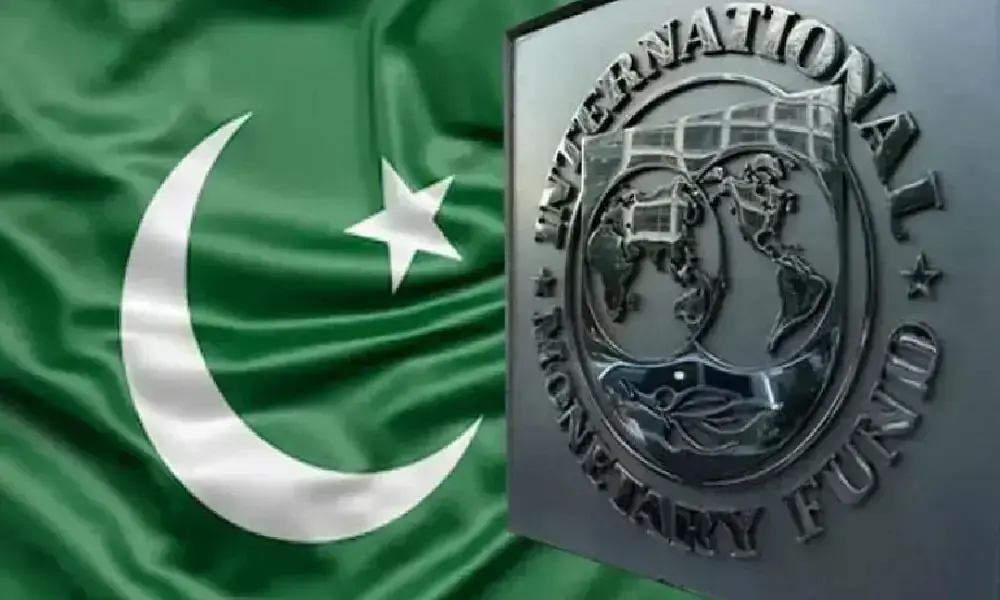
The International Monetary Fund (IMF) has lowered Pakistan’s economic growth outlook, cutting its GDP projection for the current fiscal year to 3.2 per cent, down from 3.6 per cent estimated in its October 2025 World Economic Outlook.
The Fund, in its latest report “World Economic Outlook 2026 update, global economy: steady amid divergent forces”, estimated Pakistan’s GDP growth at three per cent in 2025, which is projected to grow to 3.2 per cent in the outgoing fiscal year 2026 and 4.1 per centThe in 2027.
World Bank has projected Pakistan’s GDP growth to remain at three per cent in fiscal year 2025–26 before rising to 3.4 per cent in fiscal year 2026–27.
The National Accounts Committee (NAC) has approved the updated growth of GDP during fiscal year 2024-25 at 3.09 per cent. The Committee further estimated that the economy has posted a growth of 3.71 per cent during the first quarter (Q1) of fiscal year 2025-26.
The Fund stated that global growth is projected to remain resilient at 3.3 per cent in 2026 and at 3.2 per cent in 2027: rates similar to the estimated 3.3 per cent outturn in 2025.
The forecast marks a small upward revision for 2026 and no change for 2027 compared with that in the October 2025 WEO. This steady performance on the surface results from the balancing of divergent forces. Headwinds from shifting trade policies are offset by tailwinds from surging investment related to technology, including artificial intelligence (AI), more so in North America and Asia than in other regions, as well as fiscal and monetary support, broadly accommodative financial conditions, and adaptability of the private sector.
Global headline inflation is expected to decline from an estimated 4.1 per cent in 2025 to 3.8 per cent in 2026 and further to 3.4 per cent in 2027.
The inflation projections are also broadly unchanged from those in October and envisage inflation returning to target more gradually in the United States than in other large economies.
Risks to the outlook remain tilted to the downside. Re-evaluation of productivity growth expectations about AI could lead to a decline in investment and trigger an abrupt financial market correction, spreading from AI-linked companies to other segments and eroding household wealth.
Trade tensions could flare up, prolonging uncertainty and weighing more heavily on activity. Domestic political tensions or geopolitical tensions could erupt, introducing new layers of uncertainty and disrupting the global economy through their impact on financial markets, supply chains, and commodity prices.
Larger fiscal deficits and high public debt could put pressure on long-term interest rates and, in turn, on broader financial conditions.
On the upside, activity could be further lifted by AI-related investment and eventually transform into sustainable growth if faster AI adoption translates into strong productivity gains and increased business dynamism. Activity could also be supported by a sustained easing in trade tensions.
Policies to foster stability and sustainably lift medium-term growth prospects require a keen focus on restoring fiscal buffers, preserving price and financial stability, reducing uncertainty, and implementing structural reforms without further delay.
For the latest news, follow us on Twitter @Aaj_Urdu. We are also on Facebook, Instagram and YouTube.