


PM invites Austrian investors, business companies to invest in Pakistan


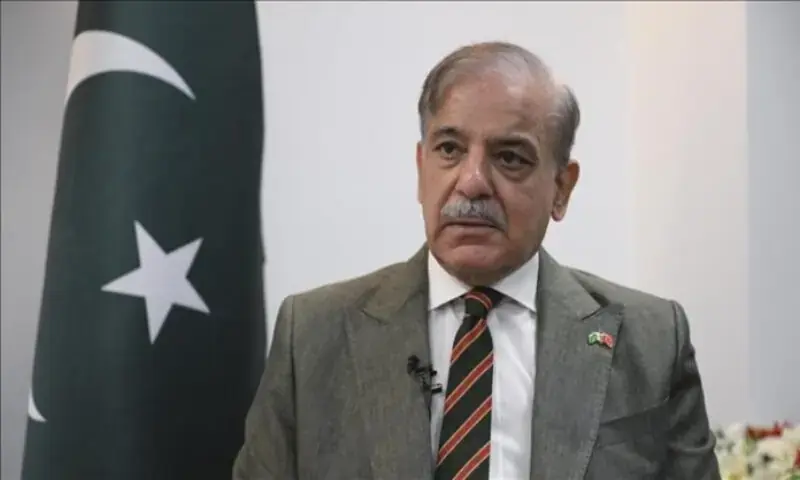
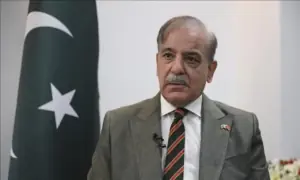
Prime Minister Shehbaz Sharif on Monday underscored Pakistan’s commitment to boosting bilateral economic cooperation with Austria while highlighting the country’s vast potential in key sectors such as renewable energy, agriculture, mining, and human resource development.
Addressing the Pakistan-Austria Business Forum in Vienna, the prime minister said that Pakistan was an agrarian country and that more than 60% of the population lived in rural areas, calling upon Austrian expertise to enhance value addition in citrus and other produce for export markets.
He also invited Austrian investors to explore opportunities in mining, tourism and engineering sectors.
“Austria has world-class expertise in engineering, renewable energy, environmental technology and advanced manufacturing,” he said while addressing the Pakistan-Austria Business Forum in Vienna.
He invited Austrian companies to participate in Pakistan’s renewable energy projects, grid modernisation, and energy logging initiatives.
PM Shehbaz Sharif extended a personal invitation to Austrian business leaders to visit Pakistan, promising to showcase investment opportunities and the country’s scenic treasures, from snow-capped mountains to vibrant cultural hubs.
The prime minister said both countries shared a longstanding friendship grounded in historical ties and decades of Austrian business engagement in Pakistan, particularly in areas such as cable car installations, minerals and renewable energy technology.
“Although the level of economic activity in recent years has declined for a variety of reasons, Austrian firms have made impactful contributions in Pakistan,” he said.
The prime minister noted that discussions with the Austrian Federal Chancellor had been very warm, fruitful and productive, where both leaders agreed to follow up the meetings to take discussions to their logical conclusion.
He said approximately 60% of the country’s 240 million population was young and ready to contribute to global technological and industrial value chains.
“We are working to equip our youth with modern training — laptops, AI skills, IT-led education, vocational and technical training are being rolled out at the federal and provincial levels,” he said, stressing Pakistan’s readiness to supply internationally certified skilled labour to European markets in response to demand.
He also expressed the resolve to combat illegal immigration in collaboration with partners like Austria, Germany and France.
The prime minister also announced Pakistan’s intention to host the EU-Pakistan Business Forum in Islamabad at the end of April, with participation from Austrian companies expected to further solidify economic collaboration between the two nations.
Deputy Prime Minister and Foreign Minister Ishaq Dar, on the occasion, emphasised that under PM Shehbaz Sharif’s leadership, Pakistan’s foreign policy had given economic diplomacy equal weight to traditional diplomatic engagement.
“Economic cooperation is the main driving force of Pakistan-Austria bilateral relations,” he said, noting Austria’s technological excellence and Pakistan’s dynamic, resilient and rapidly evolving economic landscape.
Ishaq Dar added that Pakistan had undertaken structural reforms to stabilise the macroeconomic environment, enhance fiscal discipline and improve the ease of doing business.
“Our bilateral trade volume does not reflect the true potential of the friendship and the relationship of our two great countries. This is precisely why we are here — to convert this potential into performance,” he stated.
Earlier, Vice President of the Austrian Federal Economic Chamber Carmen Goby reaffirmed Austria’s keen interest in expanding cooperation with Pakistan.
Recalling her leadership of an Austrian business delegation to Pakistan in 2022, she praised the hospitality shown by Pakistan and highlighted the country’s economic prospects, particularly in hydropower, rail infrastructure, digital transformation and emerging technologies, including drones and quantum applications.
“I see considerable potential for expanding cooperation in infrastructure development, industrial competitiveness and digital transformation,” she said, adding that Pakistan’s geographic location positions it as a “vital bridge to one of the world’s most dynamic future regions.”
The Austrian business leader also outlined Austria’s own strategic positioning as a logistics and defence hub in Central Europe, suggesting complementary opportunities for partnership with Pakistan.
For the latest news, follow us on Twitter @Aaj_Urdu. We are also on Facebook, Instagram and YouTube.