


Thai parties tap nationalist mood as Cambodia clashes roil rural voters



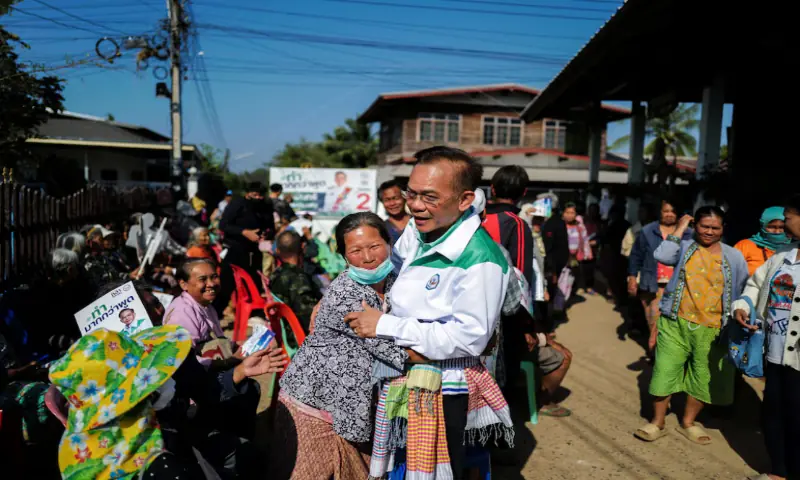
Thai lawmaker Phumin Leethiraprasert has switched party allegiances in his re-election campaign for a February 8 poll, aiming to show voters he can make tough decisions to help border communities scarred by clashes with neighbouring Cambodia.
“I am not running for Pheu Thai this time around because of the border conflict,” said Phumin, 62, referring to the party of billionaire former premier Thaksin Shinawatra that dominated swathes of Thailand’s mainly agrarian northeast for decades.
Nationalist sentiment has surged across Southeast Asia’s second-largest economy after a perception that the Pheu Thai-led administration’s handling of a border crisis led to the worst fighting with Cambodia in decades, killing 149 people.
“Bombs hit our homes, and our people died,” the former doctor, who has forged new ties with one of the political parties racing to harness the nationalist fervour in the final stretch of the campaign, told a small crowd at a rally.
Voters angered by the damage in his district of Kantharalak had urged Phumin to defect, he said last week.
So he is now running as a candidate of the Kla Tham Party, an ally of the ruling Bhumjaithai, which took power after the border row led to the removal of Thaksin’s daughter Paetongtarn Shinawatra, who was then prime minister.
‘MAKE THEM AFRAID’
Anger and anxiety linger in the area after 19 Thais were killed and hundreds of thousands evacuated from border communities, such as Kantharalak, in two bouts of fighting in July and December.
“We have to make them afraid,” said Uthai, a 58-year-old in the village of Sam Meng, referring to Cambodia. “We have been too soft.”
Thailand and Cambodia agreed to a second ceasefire in late December, ending weeks of clashes following the collapse of a July truce brokered with the help of US President Donald Trump.
Many voters are backing the Thai army’s plans for a border wall along parts of the 817-km (508-mile) land frontier, Phumin said, though construction has yet to begin.
“They don’t want to see border crossings reopened or trade with Cambodia resumed.”
PARTIES SEEK TO RIDE WAVE
In the midst of the intense border fighting, Prime Minister Anutin Charnvirakul dissolved parliament in December after fewer than 100 days in power, setting the stage for snap polls, designed to gain from the wave of intense nationalism unleashed.
At rallies, Anutin and his Bhumjaithai expressed strong support for the military and the construction of the border wall, a policy echoed by other conservative, pro-army groups.
That has forced key rivals, the progressive People’s Party, which is leading in the polls, and Pheu Thai, to redraw campaign planks to avoid appearing unpatriotic, said political scientist Thitinan Pongsudhirak at Bangkok’s Chulalongkorn University.
“They are being portrayed as not nationalist enough, not patriotic enough, and not anti-Cambodian enough,” he said, describing the efforts of pro-military parties to undercut the competition.
The People’s Party, long associated with calls for military reforms, has softened its anti-establishment stance, underlining plans to exert diplomatic pressure on Cambodia to ensure stable ties with Thailand.
Pheu Thai, facing widespread criticism over Thaksin’s once- close ties with former Cambodian premier Hun Sen, is redoubling efforts to show it is committed to defending Thailand’s sovereignty.
“We can live alongside them,” said Samrong Narasa, whose home in the village of Sam Meng, about 10 km (6 miles) from the border, was destroyed by Cambodian shelling in December.
“But we don’t want to be friends with them,” added the 52-year-old, who wants the new government to do more to protect people and their livelihoods.
For the latest news, follow us on Twitter @Aaj_Urdu. We are also on Facebook, Instagram and YouTube.