


Trump tariffs exposed cracks in India’s economic reforms: Wall Street Journal




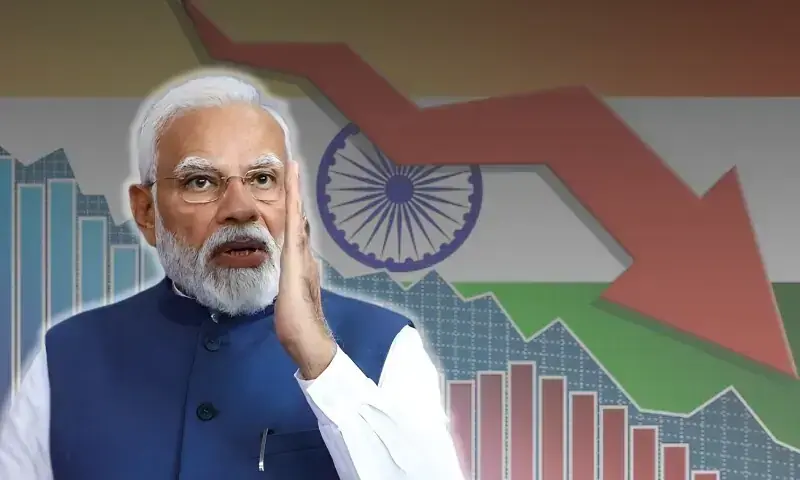
India has failed to derive any real benefit from its reform agenda after the imposition of steep tariffs by the United States under President Donald Trump, the US newspaper The Wall Street Journal said, raising serious questions over New Delhi’s economic reforms.
In a critical assessment published on Friday, the influential American daily described the Modi government’s economic record as inconsistent and underwhelming, saying India lacked a clear vision for a free-market economy and instead relied on partial and cosmetic reforms.
According to the report, India’s economic reforms under Prime Minister Narendra Modi were often delayed, weakly implemented and marked by reversals.
It pointed out that in August 2025, the United States imposed a 50 per cent tariff on Indian goods, the highest applied to any major economy, a move that economists say laid bare the fragility of India’s reform claims.
The Wall Street Journal said the tariffs highlighted the reality that India’s economy remains heavily regulated and that the Modi government failed to take bold steps towards genuine market liberalisation.
It added that non-tariff barriers further aggravated US concerns, while key sectors such as insurance and nuclear energy were opened to foreign investment only after prolonged delays.
The report also criticised the handling of domestic reforms, noting that changes following the banking crisis were introduced too late, while the flawed implementation of the Goods and Services Tax (GST) was described as one of the government’s major failures. Despite being projected as a landmark reform, India’s GST system remains more complex than global value-added tax models, the newspaper said.
Labour reforms, according to the report, avoided fundamental changes, while agricultural reforms were rolled back under political pressure. Reforms related to land, labour and subsidies were repeatedly postponed, and the privatisation of loss-making state-owned enterprises failed to materialise.
The Wall Street Journal further highlighted persistent problems in the energy sector, stating that repeated claims of power sector reform fell flat as state-run electricity utilities continued to suffer severe financial distress. Bureaucratic changes were also termed largely superficial, delivering little structural improvement.
The report said the Modi government ignored criticism ahead of the crisis and opted for half-measures instead of decisive reforms, allowing high tariffs and protectionist policies to undermine competitiveness.
Concluding its analysis, the American daily said India had pursued symbolic reforms rather than substantive change, warning that the current situation demands a comprehensive economic overhaul rather than policy window-dressing.
For the latest news, follow us on Twitter @Aaj_Urdu. We are also on Facebook, Instagram and YouTube.