
2026’s first supermoon: ‘Wolf Moon’ set to dazzle skies in Pakistan

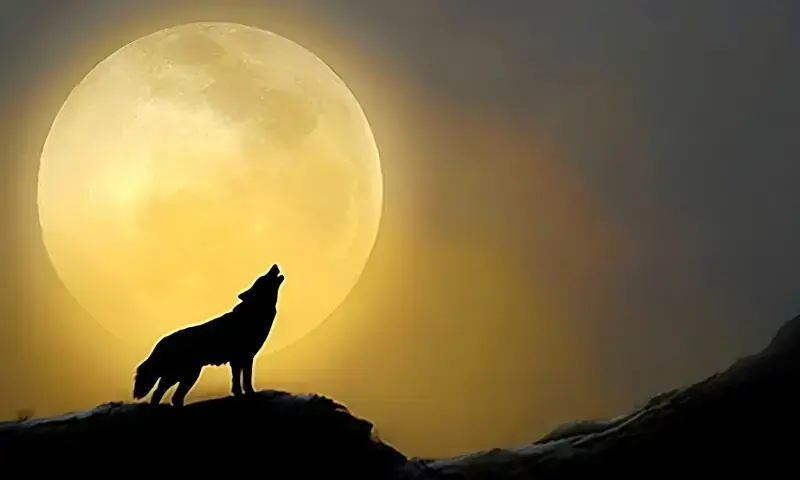
Pakistan’s skies will be illuminated by the first supermoon of 2026 on Saturday, traditionally known as the “Wolf Moon,” according to the Space and Upper Atmosphere Research Commission (SPARCO).
A SPARCO spokesperson said the supermoon will rise in Pakistan at 5:51 p.m., with lunar illumination reaching 99.8 per cent. The celestial event will be visible on the evenings of January 3 and 4.
This supermoon marks the latest in an ongoing series, with the previous one last observed in October 2025.
The phenomenon coincides with the peak of the Quadrantids meteor shower, adding to the spectacle.
SPARCO said the distance between the Earth and the Moon during this event will be around 362,000 kilometres. As a result, the Moon is expected to appear 6 to 7 per cent larger and about 10 per cent brighter than a typical full moon.
Astronomers explain that the Moon qualifies as a supermoon because it occurs near perigee, the point at which the Moon is closest to Earth in its orbit.
This proximity enhances its apparent size and brightness.
Internationally, the full moon will reach its peak early Saturday morning, January 3, at around 5:02 a.m. Eastern Time in the United States.
However, experts say the most striking views for the public will be during nighttime hours.
The term “Wolf Moon” originates from ancient North American traditions, where January’s full moon was associated with wolves howling during harsh winter nights.
In parts of Europe, it has also been called the “Cold Moon” or “Hard Moon,” reflecting the severity of the season.
Astronomers have also noted that this full moon occurs close to Earth’s perihelion, the time of year when the planet is nearest to the Sun. While it has no direct impact on weather, it is considered an interesting astronomical alignment.
In the Northern Hemisphere, the Wolf Moon will trace one of the highest paths across the sky compared to other full moons of the year, making it visible for longer periods.
No special equipment is required to observe the event. Skywatchers are advised to look toward the eastern horizon after sunset and watch the Moon rise against the darkening sky.
SPARCO said the next supermoon is expected later in the year, in November 2026.
For the latest news, follow us on Twitter @Aaj_Urdu. We are also on Facebook, Instagram and YouTube.
Pakistan
United States
Earth
Moon
sun
northern hemisphere
supermoon
SPARCO
Space and Upper Atmosphere Research Commission

BTS announces new album and world tour starting march 20

Zootopia 2 breaks record to become top-grossing Disney animation film

Nico Ali Walsh balances legacy and ambition in boxing career

Mel Gibson and Rosalind Ross separate after 9 years together

Beyoncé joins billionaire musicians club