


Ex-CNN journalist Don Lemon arrested after anti-ICE church protest in Minnesota



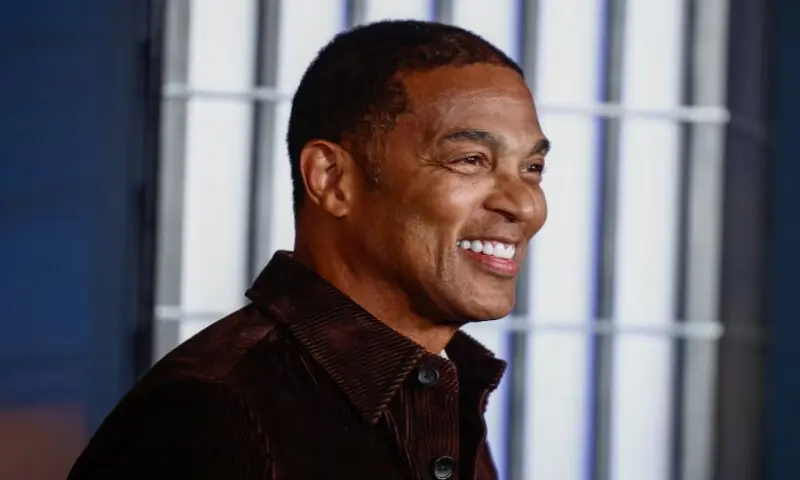
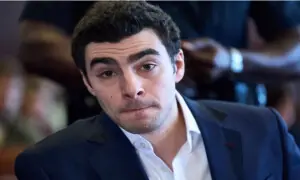
Former CNN anchor Don Lemon has been arrested for his involvement in a Minnesota church protest opposing U.S. President Donald Trump’s aggressive deportation campaign — the latest Justice Department move against a critic of the administration.
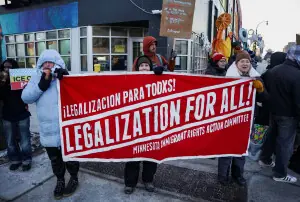
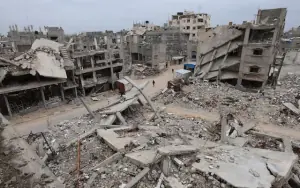
Lemon livestreamed a demonstration earlier this month that disrupted a church service in St. Paul, protesting at the thousands of armed immigration agents that Trump has sent this month into Minnesota’s biggest cities.
Federal agents in the surge have frequently clashed with protesters and fatally shot two U.S. citizens, one before and one after the protest that led to Lemon’s arrest.
He is charged with conspiring to deprive others of their civil rights and violating a law that forbids obstructing access to houses of worship, according to a Justice Department official.
FBI and Homeland Security Investigations agents arrested him in Los Angeles, according to his lawyer Abbe Lowell. The move occurred just over a week after a federal magistrate judge declined to issue an arrest warrant for Lemon.
He had been under FBI surveillance for several days leading up to his arrest, according to a person with knowledge of the matter. The FBI declined to comment.
“Don has been a journalist for 30 years, and his constitutionally protected work in Minneapolis was no different than what he has always done,” Lowell said in a statement.
“This unprecedented attack on the First Amendment and transparent attempt to distract attention from the many crises facing this administration will not stand.”
The First Amendment of the U.S. Constitution protects freedom of speech and freedom of the press.
Three other people, including the independent local journalist Georgia Fort, were also arrested, said Attorney General Pam Bondi.
REPEATED DOJ ACTION AGAINST TRUMP CRITICS
Outrage over the tumult in and around Minneapolis has sparked a political crisis for Trump, with his Republican Party divided over whether the immigration crackdown had gone too far, a Reuters/Ipsos poll found.
Under Trump, the Justice Department has regularly tried to prosecute a succession of critics and perceived enemies of the president. It unsuccessfully sought to prosecute former FBI Director James Comey and New York Attorney General Letitia James, who both led investigations into Trump.
It has also opened investigations into nine Democratic lawmakers, a former CIA director, and Federal Reserve Chair Jerome Powell, who has resisted Trump’s pressure to rapidly lower interest rates.
Lemon spent 17 years at CNN, becoming one of its most recognisable personalities, and he did not shy from criticising the government on air. He was fired in 2023 after making on-air comments about women and then-Republican presidential candidate Nikki Haley that were widely perceived as sexist. Lemon later apologised.
Trump frequently lambasts journalists and news outlets, going further than his predecessors by sometimes suing them for damages or stripping disfavoured outlets of their access-granting press credentials.
Earlier this month, FBI agents with a search warrant seized laptops and other devices from the home of a Washington Post reporter who has extensively covered Trump’s firing of hundreds of thousands of federal workers, saying it was an investigation into the leaking of secret government information.
‘DANGEROUS’ MOVE PRESS ADVOCATE SAYS
Press advocates said the FBI search and Lemon’s arrest were part of Trump’s broader effort to encroach on press freedoms. Trump says his attacks are because he is tired of “fake news” and hostile coverage.
“Jailing a journalist for doing their job is dangerous — not only for press freedom, but for the public’s right to know,” National Press Club President Mark Schoeff said in a statement.
Journalists in the U.S. sometimes get arrested by local police when covering protests, accused of blocking roads or sidewalks or getting in law enforcement’s way.
Legal experts said they were unaware of any U.S. precedent for journalists being arrested after the fact, or under the two laws used to charge Lemon, including the Freedom of Access to Clinic Entrances Act, a 1994 law that prevents obstructing abortion clinics and places of worship.
Lemon was arrested under an 1871 law originally designed to combat the Ku Klux Klan and the FACE Act, a 1994 law used against protesters at abortion clinics.
“It seems to me to be just an enormous stretch to suggest that the conduct of anybody who went into the church could remotely approach the level of misconduct that would justify the use of these particular federal statutes,” said Jane Kirtley, a law professor at the University of Minnesota.
JUDGE HAD CRITICISED PRIOR ATTEMPT TO CHARGE
After the protest, prosecutors were able to get arrest warrants for three people involved, but the magistrate judge declined to issue warrants for Lemon and the video producer who joined him at the church, along with some other protesters.
The judge said prosecutors had not shown “probable cause” that Lemon and the producer had broken a law.
In an unusual move, prosecutors filed emergency applications in an unsuccessful effort to get Minnesota’s chief federal judge and then the 8th Circuit Court of Appeals to overrule the magistrate judge.
Patrick Schiltz, the chief judge, said the prosecutors’ hasty appeals were without precedent and told the prosecutors that if they disagreed with a magistrate judge’s decision, they must seek an indictment from a grand jury.
Schiltz wrote that Lemon and his producer “were not protesters at all.”
“There is no evidence that those two engaged in any criminal behaviour or conspired to do so,” he wrote.
For the latest news, follow us on Twitter @Aaj_Urdu. We are also on Facebook, Instagram and YouTube.