


Trump sees Iranian crackdown easing, Tehran denies man to be executed

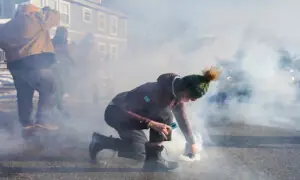
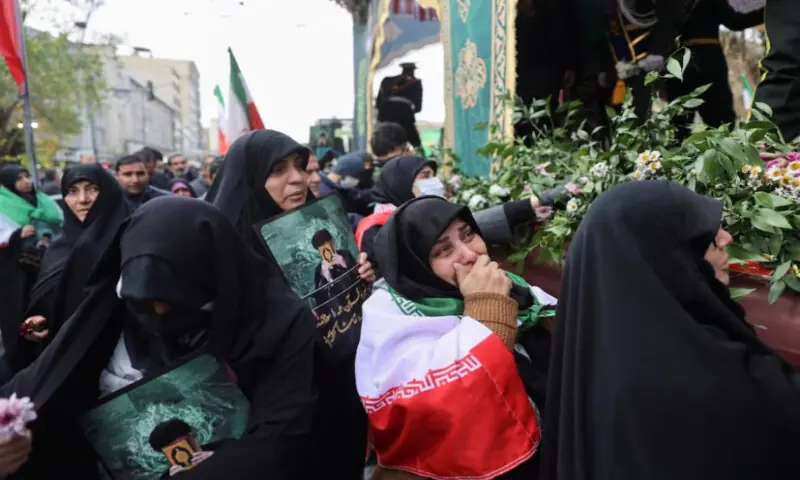
U.S. President Donald Trump said he had been told that killings in Iran’s crackdown on protests were easing and that he believed there was no current plan for large-scale executions, adopting a wait‑and‑see posture after earlier threatening intervention.
After Iran’s foreign minister said Iran had “no plan” to hang people, Iranian state media on Thursday reported that a 26-year-old man arrested during protests in the city of Karaj would not be given the death sentence.
Rights organisation Hengaw, which reported earlier this week that Erfan Soltani was due to be executed on Wednesday, said a previously communicated order for his execution had been postponed, citing his relatives.
In a social media post on Thursday, Trump responded to a news report that an Iranian protester was no longer being sentenced to death, writing: “This is good news. Hopefully, it will continue!”
Iranian state media said that while Soltani was being charged with colluding against “internal security and propaganda activities against the regime”, the death penalty does not apply to such charges.
Trump’s comments on Wednesday led oil prices to retreat from multi-month highs, and gold eased from a record peak on Thursday. Trump has repeatedly threatened to intervene on behalf of protesters in Iran, where the clerical establishment has cracked down hard on nationwide unrest since December 28.
PROTESTS APPEAR TO ABATE
People inside the country, reached by Reuters on Wednesday and Thursday, said the protests appear to have abated since Monday. Information flows have been hampered by an internet blackout for a week.
Tensions had escalated on Wednesday, with Iran saying it had warned neighbours it would hit American bases in the region in the event of U.S. strikes, and a U.S. official saying the United States was withdrawing some personnel from bases in the region.
Trump, speaking at the White House, said he has been told that killings in the crackdown were subsiding. Asked who told him that the killings had stopped, Trump described them as “very important sources on the other side.”
The president did not rule out potential U.S. military action, saying “we are going to watch what the process is” before noting that his administration had received a “very good statement” from Iran.
In separate comments to Reuters, Trump expressed uncertainty over whether Reza Pahlavi, the son of the late shah of Iran and a prominent figure in Iran’s fractured opposition, would be able to muster support within Iran to eventually take over.
Trump told Reuters it is possible the government in Tehran could fall due to the protests, but that in truth “any regime can fail.”
Turkey, one of several states in the region where the U.S. has forces, expressed opposition to the use of violence against Iran, with Foreign Minister Hakan Fidan saying at a press conference in Istanbul that the priority is to avoid destabilisation.
Saudi Foreign Minister Prince Faisal bin Farhan held a phone call with Iranian Foreign Minister Abbas Araghchi on Thursday and discussed ways to support security and stability in the region, Saudi state media reported.
Qatar said on Wednesday that drawdowns from its Al Udeid air base, the biggest U.S. base in the Middle East, were “being undertaken in response to the current regional tensions”.
Iran launched missiles at Al Udeid last year in response to U.S. airstrikes on its nuclear installations during the 12-day war between Tehran and Israel.
G7 CONDEMNS REPRESSION
The U.S.-based HRANA rights group says it has so far verified the deaths of 2,435 protesters and 153 government-affiliated individuals in the unrest that started with protests over soaring prices before turning into one of the biggest challenges to the clerical establishment since the 1979 Islamic Revolution.
The death toll has dwarfed that of previous bouts of unrest crushed by the Iranian authorities, such as the 2022 “Woman, Life, Freedom” protests and unrest sparked by a disputed election in 2009.
Iran and its Western foes have both described the unrest as the most violent since the 1979 Islamic Revolution.
Iranian authorities said the demonstrations turned from a legitimate protest at economic grievances into unrest fomented by its foreign enemies, accusing people it described as terrorists of attacking the security forces and public property.
The Group of Seven countries condemned what they described as the Iranian authorities’ brutal repression of the Iranian people, saying they were prepared to impose additional restrictive measures on Iran if it continues to crack down.
For the latest news, follow us on Twitter @Aaj_Urdu. We are also on Facebook, Instagram and YouTube.