


High taxes, energy costs driving businesses abroad, admits finance minister




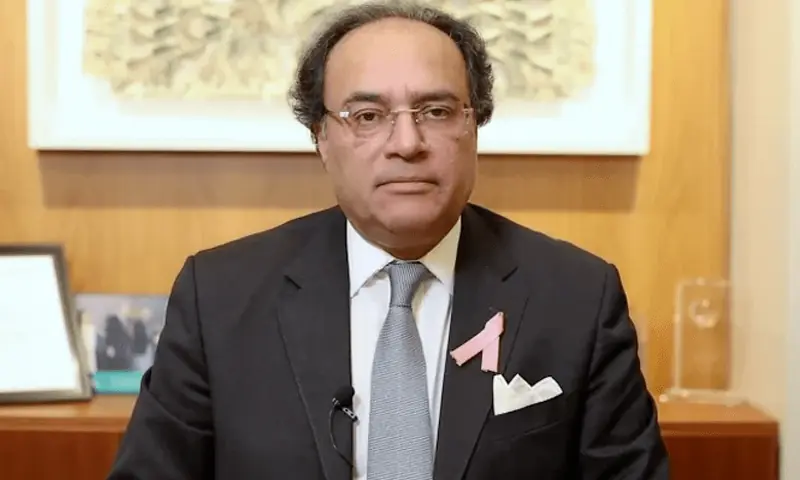
Finance Minister Muhammad Aurangzeb on Wednesday said that economic growth in Pakistan is not possible without structural reforms, and the government is taking steps to stabilise the economy.
Speaking at the Pakistan Policy Dialogue, Aurangzeb acknowledged that some business firms were leaving the country, attributing this primarily to high taxes and rising energy costs, which the government is addressing through reform measures.
Referring to reforms, the finance minister said the tax policy now falls under the Ministry of Finance, while the Federal Board of Revenue (FBR) is responsible only for revenue collection.
The minister highlighted that Pakistan received $38 billion in remittances last year, and the figure is expected to rise to $41 billion this year.
He highlighted the government’s measures to facilitate businesses, including changes in taxes and tariffs, improvements in the energy sector, and cuts on duties for raw materials to help industries grow and boost exports.
Aurangzeb said that efforts were underway to bring non-banking individuals into the formal financial system, and by June, all government payments will be shifted to digital channels.
“Rationalising tariffs and reducing trade costs are essential to moving toward an export-driven economy,” he added.
The finance minister also discussed privatisation initiatives, noting that local investors participated in the privatisation of PIA, and 24 other state-owned entities have been handed over to the Privatisation Commission.
He highlighted inefficiencies in public sector institutions, stating that roughly Rs1 trillion was being wasted annually on entities such as Utility Stores Corporation, PWD, and PASSCO, adding that corruption was rampant in the subsidies provided to these organisations.
Reforms have been introduced to address these issues, he added.
Aurangzeb emphasised that economic reforms will reduce the burden on the national exchequer, increase industrial output and exports, and encourage the private sector to play a more active role.
“These measures can serve as a pathway to East Asia-style economic growth for Pakistan, and continuous reforms will continue to strengthen the economy,” he said.
For the latest news, follow us on Twitter @Aaj_Urdu. We are also on Facebook, Instagram and YouTube.